
FEEDING OUR CHILDREN, FEEDING OUR FUTURE: THE DIRECT SERVICE OF A POLICY NONPROFIT

Hunger doesn’t just harm the physical health of children; it affects nearly every aspect of their lives, from self-worth to academic performance to socialization.

According to the American Psychological Association, hunger is associated with anxiety and depression in children. In adolescents, hunger is associated with depressive disorders and suicidal tendencies.

The distraction of hunger also makes schoolwork more difficult. Research has shown that hungry children have lower math scores and are more likely to repeat a grade. And being hungry while others are fed can make children feel ashamed, isolated, and inferior. Hungry children have been found to have low levels of self-efficacy, which means that they don’t believe they can achieve their goals.

Hunger doesn’t need to happen.

While temporary assistance is important, long-term legislative change will be needed to solve this problem. Sure, to the average person, the services a policy nonprofit provides is a little less tangible than what a direct-service nonprofit provides, so it needs some extra explaining. (We can’t really point to facilities or backpacks full of donated food.)

What we can point to is the kid sitting in first period, well-fed and able to focus because they could participate in the School Breakfast Program which we’ve worked to expand and curated a website to compile research and data, and provide guidance for participation.

We can point to one out of the millions of nutritious meals served to Florida’s children at their local Summer BreakSpot site during a hot summer. In fact, we can point to the Summer BreakSpot campaign, an aggressive branding of the Summer Food Service Program with the (achieved, exceeded) goal of reaching more children throughout the state. Before this branding and networking was picked up by the Florida Department of Agriculture and Consumer Services (yay!) we even ran a direct hotline which connected hungry kids to Summer BreakSpot sites near them. (Nowadays you can just text “FoodFL” to 877-877 to find your nearest site, by the way.)

We can point to the passage of the Healthy, Hunger-Free Kids Act in December 2010 when suppers were authorized nationwide as part of the Afterschool Meals Program. This was a result of relentless advocacy from Florida Impact to End Hunger and incredible community advocates and local leaders, working with our elected members of Congress.

We can point to a project currently in the works which will bring healthy foods like fresh fruits and vegetables to Florida’s food deserts…more on that soon…

And so much more.

At Florida Impact to End Hunger, we’re working to help pass laws that guarantee families and their children are provided consistent meals by law — and we won’t stop until every child is fed.

Raffaela Susi

Graphic Design (and former Summer BreakSpot Hotline Operator ?)

Florida Impact to End Hunger
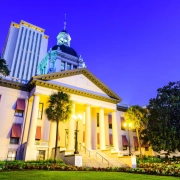
FLORIDA CHILDREN TOOK OVER THE CAPITOL BUILDING

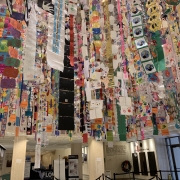
The hands, hung. The meetings, set. The dining sets, placed. The swag, ordered. The final practice for the performance, finished. Children’s Week had arrived.

What is Children’s Week? “Florida’s Children’s Week is an annual week-long celebration filled with joyful singing voices of young children, the colorful “Hanging of Hands”, and the dedication of thousands of child advocates across Florida.”

It truly is a special time and a very powerful one. Florida Impact to End Hunger joined the thousands of child advocates at the Florida Capitol this past January and the event speaks in numbers. Folks in Florida care about kids and it shows.

Many thanks to the staff who organize and work this event, they do an amazing job every year! You are able to enjoy a free breakfast and lunch, a storybook village with interactive reading booths, partner booths with face painting, photos booths, and free swag; not to mention an awards dinner and reception. This year, Jack Levine was honored as the award recipient who spent his career working towards child prosperity in Florida.

Feeling honored and grateful to be able to work alongside so many Floridians wanting what’s best for children in our state is an understatement.

Florida Impact to End Hunger is working hard to expand the Florida Afterschool Meals Program to Parks and Recreation centers across the state by filing Senate Bill 668 and House Bill 83. If you haven’t already, please take a moment to support our efforts so we can reach more hungry children by signing our letter of support.

Children in Florida need their advocates. Will you join the thousands?


Kelli Greene

Administrative Coordinator

Florida Impact to End Hunger

A PROGRAM THAT FEEDS SENIORS AND THEIR FURRY COMPANIONS

Studies show pets bring a level of joy and companionship to seniors who live alone. What does this have to do with hunger-related issues the elderly face? Taking care of a pet includes feeding, grooming and veterinary care, which can be financially burdensome and physically challenging to seniors. More often than not, a devoted animal lover with limited access to food will feed their hungry pet before they feed themselves.

One of Florida Impact to End Hunger’s community partners, Meals on Wheels of South Florida, has been providing nutritious meals to seniors for 35 years. Executive Director Mark Adler explains, “The need for this type of program became apparent when our volunteers who deliver meals observed that their elderly clients were going without their full meals because they were sharing their meals with their pets.”

Acknowledging that they were on a fixed budget and many were homebound and physically unable to buy pet food, Meals on Wheels secured funding to purchase pet food from local donors and grants. Hence the beginning of the Meals for Companion Pets Program.

Once a month, free pet food is delivered to clients with a maximum of 2 pets. This is especially important to homebound seniors who have no one to shop for their pet needs. This program can keep seniors and their pets together and healthy in their own homes. Sometimes a furry friend is exactly what the doctor ordered.

Please contact Meals On Wheels South Florida at 954-731-8770 for additional information on this amazing program or visit https://www.mowsoflo.org/meals-for-companion-pets.

Post written by Sue McAllister, Regional Director of Southeast Florida, Florida Impact to End Hunger

THE COMPLICATIONS OF ELDER FOOD INSECURITY

“I believe every patient needs a physician who will be an advocate to help them regain their health.” – Dr. Jenneffer Pulapaka, DPM, ACFAS, CWSP, DABMSP, FACCWS

How does food insecurity impact our elderly population? From 2001 to 2015, the number of older adults who were food insecure more than doubled to 5.4 million individuals in the United States. Food insecurity was reported to affect all aspects of their life and health, along with increasing stress and reducing coping abilities. There is “increasing evidence demonstrating that food insecurity is an important risk factor for poor health has made it virtually incontrovertible that dietary quality, not just calories, is an essential component of supporting food security”. Furthermore, food insecurity is associated with an increased risk for numerous chronic conditions, including depression, insomnia, substance abuse, diabetes mellitus type 2, obesity, hypertension, coronary heart disease, congestive heart failure, dyslipidemia, and chronic kidney disease.

How is this different from adults or children?

Elderly patients with multiple chronic conditions/diseases were significantly more likely to report food insecurity. For many of the food insecure elderly, there is a “stigma effect arising from welfare use” that may lead to reduced self-esteem and result in depressive moods, which exacerbates chronic diseases. “To make matters worse, food insecurity is associated with increased cost-related medication non-adherence. Because if you don’t have money for food, one probably doesn’t have money for medications. Hence, contributing to an increased burden on our healthcare system, as noted in the 2017 Rand Report.

Sadly, numerous research papers report that adults with depression have higher rates or levels of multiple chronic disease risk factors, including cardiovascular disease, dyslipidemia, hypertension, insomnia, substance abuse, diabetes, obesity, metabolic syndrome, physical inactivity, and systemic inflammation.

Elderly SNAP participants with very low food security have even higher odds of depression and correlated with negative self-attitudes. But, there is now research that is beginning to delve into whether reforms to the food assistance program aimed at reducing stigma can help alleviate emotional distress and increase the quality of food among the elderly welfare recipients.

With that noted, SNAP does not cause these problems, like obesity; rather, it is likely that more obese populations are enrolled in SNAP. Adults can use SNAP to one’s advantage because the 2019 study reported that very low food security and physical health outcomes were negatively significant before SNAP enrollment. But, decreased after SNAP participation, indicating that SNAP may have prevented poor physical health resulting from very low food security. So, on the positive side, SNAP is associated with a reduction in health care costs; “low-income adults who participate in SNAP incur an average of $1,400 per year less in health care expenditures compared with matched nonparticipants ” and “perceived farmers’ market access related to lower incidence of overweight/obesity in SNAP”.

Elder food insecurity is a complicated and dynamic construct involving chronic medical conditions, mental fitness, and the overall lifestyle of our communities. The takeaway is that there are ways to improve the health and wellness of our society regardless of income; through healthful foods, social support, quality sleep, physical fitness, positive emotions, and cessation of substance abuse. So, how will you uplift your community in 2020?

Dr. Jenneffer Pulapaka

Podiatric Surgeon & Wound Care Physician

DeLand Foot and Leg Center

Sources:

Aligning Programs and Policies to Support Food Security and Public Health Goals in the United States. Seligman HK, Berkowitz SA.

Annu Rev Public Health. 2019 Apr 1;40:319-337. doi: 10.1146/annurev-publhealth-040218-044132. Epub 2018 Nov 16.

PubMed [citation]

PMID: 30444684

PMCID: PMC6784838


Food stamps, food insecurity, and health outcomes among elderly Americans.

Pak TY, Kim G.

Prev Med. 2020 Jan;130:105871. doi: 10.1016/j.ypmed.2019.105871. Epub 2019 Oct 31.

PMID:31678175


Predictors of Diet-Related Health Outcomes in Food-Secure and Food-Insecure Communities.

Kaiser ML, Dionne J, Carr JK.

Soc Work Public Health. 2019;34(3):214-229. doi: 10.1080/19371918.2019.1575313. Epub 2019 Feb 15.

PubMed [citation]

PMID:30767652


Ziliak JP, Gundersen C. The State of Senior Hunger in America 2015: An Annual Report – Supplement 2017.

Rand Report 2017: https://www.rand.org/topics/health-health-care-and-aging.html

Atypical depressive symptoms and obesity in a national sample of older adults with major depressive disorder. Chou KL, Yu KM Depress Anxiety. 2013 Jun; 30(6):574-9.

2020: A STRONG YEAR IN THE FIGHT TO #ENDHUNGER

The Florida Legislature season begins Tuesday, January 14th. For most, that won’t mean much, but for Florida Impact to End Hunger, it is a BIG day. We are supporting legislation that would provide access to nutritious meals for low-income children participating in parks and recreation programs. This sounds like a simple change but advocating for legislative change is anything but simple.

With almost 3,000 bills already filed in the House, legislators must compete to even get a bill placed on a committee calendar. After a bill is drafted, it must travel through several committees before it reaches the House floor. The same thing has to happen in the Senate with a companion bill before they are brought up for a vote by the full House and Senate. With all the bills and all the legislators trying to get heard in just 60 days, one little bill—even one that would help hungry kids—can easily get lost in the shuffle.

We are happy to have strong sponsors: House Representative Duran is behind HB 83 and Senator Book is behind SB 668. Both of them are working hard to move forward. Senator Book was able to get a vote before session even started on SB 668 from its first committee! Now that the bill is moving in the Senate, Representative Duran is optimistic that his bill will be placed on a calendar. Oh my! All this and we haven’t even started session.

Last year Senator Book filed the bill, but it didn’t move out of committee early enough, despite the fact that Florida Impact to End Hunger staff and board advocated strongly in favor of the bill’s passage. But this is the year!

You can help, too. Please take a moment (I promise, only a moment) to sign on in support of the Government Sponsored Parks and Recreation Bill here: https://forms.gle/XBEQ8HDwSJ86twVB6

Let’s make this a strong year in the fight to #EndHunger.

Trudy Novicki

President/CEO

Florida Impact to End Hunger

#HB83 #SB668

HELLO, 2020: OUR NEW YEAR’S RESOLUTIONS

2020? Are you serious? This month marks the start of my third year with Florida Impact to End Hunger, and I feel like I’m just getting started. Although my oldest son turns 10 this year and I just celebrated my 12th wedding anniversary, I can’t help but feel like time is just flying by!

As I ponder Florida Impact to End Hunger in 2020 and my role as Chief Operating Officer, I’ve come up with a few “New Year’s Resolutions:”

1. Start at least one new project in North Florida. Approximately 95% of the local work we do as an organization happens in South Florida. Our two regional directors are based there, a number of board members live there, and a good portion of our grantors and funders are located there. However, with our Administrative Coordinator, Kelli, and me up here in Tallahassee, we have started to seek out new funding to support efforts in the Big Bend – where hunger is no stranger to residents. So far, we have submitted two grant applications (and have two more pending) for school-based projects in Leon County. We are eager to get started on this work!

2. Improve online fundraising. With an increased focus on social media and a new communications plan, 2019 saw a spike in online fundraising. Still there is more to be done. Our fearless communications team is on the hunt for new opportunities and strategies to engage donors in both campaign contributions as well as reoccurring giving. Of course, Florida Impact to End Hunger will continue to increase our reach on all social media platforms.

3. Continue to present on state and national webinars and at conferences. Collectively in 2019, the Florida Impact to End Hunger staff has presented on 3 national webinars, at 2 national conferences, at 3 state conferences, and on 10 state or local webinars and/or conference calls in 2019. This kind of platform gets our name out to other organizations and solidifies us as “experts” in the field of anti-hunger advocacy. As we continue to expand our reach and create new and innovative projects, I look forward to more presentation invitations on both the state and national levels.

4. Expand the Healthy Retail Project into two new low-income communities. As one of Florida Impact to End Hunger’s newest projects, the Healthy Retail Project in Miami Gardens continues to gain momentum. With continued national attention on increasing healthy food options in low-income areas, we are confident we will get the support needed to expand this project into at least two new communities. Maybe even in North Florida!

5. Set aside 5 to 10 minutes for a walk, stretch, or workout (OK, this one’s for me). Don’t get me wrong – working from a home office has a number of benefits. However, I tend to miss the days of taking walks with my coworkers and being limited to the food I brought with me to eat each day. Nowadays I tend to do a lot more sitting, and my fridge and pantry are just in the next room! So this year I’m setting a resolution for myself to go outside, do some pushups, take a walk around the yard, just to do SOMETHING other than sit at my desk each day. We have heard plenty about the health risks of a sedentary lifestyle, but I’ve also started to realize that a walk or quick stretch can help me refocus and get back on track.

I look forward to the limitless potential of the year 2020. We’ll keep you posted on our progress! Please drop us line to share a few of yours or your organization’s own New Year’s Resolutions!

Katie Williams

Chief Operating Officer

Florida Impact to End Hunger

THE 2020 CENSUS IS COMING SOON—WILL YOU AND YOUR COMMUNITY COUNT?

Over the past few months, I have been a member of the Census 2020 “Hard to Enumerate” Sub-Committee in Broward County. The goal of this committee is to raise awareness and improve the census 2020 count by coordinating with human services and non-profit agencies to identify and reach out to hard-to-enumerate populations and increase participation in the census.

When I first joined this committee, it was not readily apparent what role myself or Florida Impact To End Hunger would play, however, over the past couple of months, it became crystal clear how immensely important that every person, including young children are counted in the upcoming census.

I learned that in 2010, the Decennial Census missed over two million young children under age five. Census data is used to allocate over $800 billion a year in federal funding by formula to states and communities. When we miss millions of young children, their states and communities lose proper funding in the programs that help children thrive, like schools, childcare, children’s health insurance, housing, nutrition programs and public transportation for 10 years.

Think about that: the census only happens once every ten years, so if we miss millions of children who are very much in our communities, we will also be missing funding for those millions of children for a whole decade and most of their childhood.

Here are a couple of alarming statistics from the census bureau to consider:

  • 22 million children get free or reduced lunch every day. Census data influences the distribution of the free lunch program.

  • 900 thousand children have a better shot at succeeding in school and life because of Head Start and Early Head Start. Census data influences the distribution of Head Start funds.

Florida Impact To End Hunger mobilizes communities to maximize access to federal, state and local food and nutrition programs. With funding allocations on the line, if we miss young children in the census, it is clear that it has serious consequences for them, their families and their communities.

Young children had by far the highest net undercount of any age group in the 2010 census. I encourage and challenge you to help spread the word about the importance of this upcoming census to your whole community network. Family, pediatricians, childcare providers, family resource and guidance centers, librarians, teachers and faith based organizations!

Sue McAllister

Regional Director of Southeast Florida

Florida Impact to End Hunger

FIVE LESSONS LEARNED FROM THE 2019 SUNSHINE SUMMIT TO END HUNGER

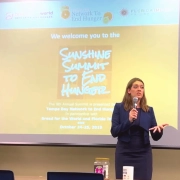
At the end of October, I had the esteemed pleasure to spend a couple of days at the Sunshine Summit to End Hunger in Tampa. Florida Impact to End Hunger proudly co-hosted the event with Bread for the World and Tampa Bay Network to End Hunger.

We were joined by hunger advocates from around the Tampa Bay area and worldwide, including Ellen Vollinger of Food Research & Action Center, Florida State Representative Jennifer Webb of District 69 (pictured), author of I Was Hungry: Cultivating Common Ground to End an American Crisis Jeremy Everett, Ankit Kawatra and Srishti Jain of Feeding India, along with Fresh from Florida staff, Florida Department of Health staff, Fresh Access Bucks staff, and many more local heroes.

Learning from veteran advocates gave me a well-rounded view of what hunger looks and has looked like in communities, but also how folks pull together for each other.

Some key take-aways for me were:

1. If you want to be a part of a solution to an issue, you must be living within proximity of it.

2. When applying for a grant or stating a project, always have an exit plan. Meaning, will the vulnerable population you are working with be able to sustain the project after it or the grant is over?

3. If data shows you a vulnerable neighborhood in your area, but you don’t know where to start to help, just ask! Folks know what kind of help they need and they don’t want you to re-invent the wheel to do so.

4. After a study was conducted about community gardens, one grad student learned that kids who participated and worked in a community garden became more socially diverse.

5. If you want to be a part of the solution, find the solution and act!

The Sunshine Summit to End Hunger brought so many of us together with one common goal, and I am very hopeful for the future of Florida as we continue to fight for those in need.

Kelli Greene

Administrative Coordinator

Florida Impact to End Hunger

HEALTHY CORNER STORES FOR HEALTHY COMMUNITIES | WHAT’S IN STORE

Developing our Healthy Corner Stores Project in Miami Gardens over this past year has been such an adventure! We are now on the cusp of bringing all our hard work off the drawing board and into action. As we head into year two of the CDC REACH grant, it seems like a good time to reflect on what we’ve accomplished, and where we’re heading next.

Much of our work up to this point has involved conducting a food environment survey (shout out to intern Shirbrina for all her hard work on this!), researching best practices from similar projects across the country, and developing our store and shopper incentives.

Currently, four stores form our community purchasing group, and we hope to add two more shortly. This group will purchase fresh, high quality produce from Feeding South Florida to sell in their stores to local Miami Gardens residents. This way, traditional convenience stores can offer an affordable, healthy alternative to the less nutritious products they typically sell.

As we move forward with the project, we hope to also address other types of healthy foods beyond produce. Alongside the produce procurement, we are also working to develop a brand and website, so that residents can more easily identify our healthy food retailers. This will be coupled with a marketing campaign and efforts to ensure all the stores are easily accessible by public transit. We are also working with Feeding Florida to bring Fresh Access Bucks to the stores, so that people paying for produce with SNAP can receive coupons to double the value of their SNAP dollars on healthy purchases.

Our goal is to bring all of these incentives together to roll out our healthy corner stores project in the first quarter of 2020. We’re excited to see what this year has in store (pun intended…) for us, and we hope you keep watching our progress as we work to combat food insecurity and food deserts in Miami Gardens.


– Sam Hopwood

Regional Director of South Florida

Florida Impact to End Hunger

BUILDING HEALTHY RELATIONSHIPS WITH THE MIAMI GARDENS COMMUNITY

Recruitment was a crucial element in the Healthy Corner Stores project. Not only did we have to recruit stores to be a part of our project, but we also had to recruit locations to support the distribution of our survey.

Since the survey is targeted toward residents of Miami Gardens, it was best to contact areas easily accessible to the residents, such as grocery stores, libraries, and health centers.

With a target of 5000 respondents, I was eager to contact as many locations as possible and to survey every opportunity I could. The distribution of the survey helped our organization build a lot of relationships with local institutions in Miami Gardens. It was great seeing how many locations were supportive of our current project and were also willing to help us in later projects. Furthermore, being able to survey at locations with a high traffic of Miami Garden residents also helped to spread awareness about the Healthy Corner Stores project and other Live Healthy Miami Gardens efforts. Many people were not aware of the projects that were going on in the city, so I am happy that I was able to share the news with them.

I have been spending my time surveying at the local Starbucks, 24 Hour Fitness, Betty T. Ferguson Recreation Center, and two chain grocery stores. Our survey responses have been increasing and have been matched with support from the general public. The residents and institutions of Miami Gardens are greatly anticipating the future of healthy corner stores throughout the city after learning more about the project and taking the survey.

– Shirbrina Jefferson

Florida Impact to End Hunger Intern