Afterschool Meal Participation Drops Significantly, According to FRAC Report

The Food Research & Action Center’s (FRAC) latest report shows that afterschool meal programs are struggling to meet the needs of children as pandemic era waivers have ended and as costs have skyrocketed. FRAC, the nation’s leading anti-hunger organization, has found that participation in afterschool meal programming has dropped substantially for the first time since 2010.

The Afterschool Nutrition Programs provide nutritious meals and snacks to children as well as educational and enrichment programming after the school day ends. The Afterschool Snack Programs began in 1998, and suppers became available nationwide in 2010 through the Healthy Hunger-Free Kids Act.

FRAC’s report, “Afterschool Suppers: A Snapshot of Participation,” analyzes the noticeable changes in afterschool meal participation, particularly comparing October 2021 and October 2022. The report found that over 1.15 million children received afterschool suppers through the Afterschool Nutrition Programs on an average school day in October 2022, reaching approximately 339,360 fewer children compared to October 2021.

Conversely, participation in afterschool meal programming was relatively stable during the pandemic, increasing 2 percent in 2020 and 3 percent in 2021, when the USDA issued waivers for all schools to participate and addressed operational challenges.

The pandemic-era waivers were critical in eliminating the barrier to participate in the afterschool meal programming and eased the burden of operating it. As a result, it allowed schools, local government agencies, and nonprofit organizations to effectively operate the Afterschool Nutrition Programs during the pandemic.

Only 38,034 sites served afterschool suppers or snacks in 2022, a significant drop of 5,089 sites from 2021 since pandemic-era waivers have ended. In 2022, sites could only operate in high-poverty communities, limiting access to suppers and snacks for millions of children who need them.

Now, with a return to pre-pandemic operations, many afterschool programs and meal sponsors are struggling with staffing shortages, increased food prices, and operational challenges. As a result, many programs have been closed, forced to limit capacity, or not been able to recover at all.

The drop in participation highlights the urgent need to reverse the concerning downward trend that started with the end of the pandemic waivers and support. FRAC’s report has highlighted the critical need to grow the Afterschool Meal Programs and recover lost ground to better serve the children and families who rely on afterschool suppers. Efforts to increase funding and expand meal programming for afterschool meals needs to be a priority to create a solid foundation to meet the needs of children, youth, and families.

Expanding Access to Afterschool Meals

In their report, FRAC noted that more than 1.6 million children missed the opportunity for a nutritious meal as a result of states failing to use federal funding. In particular, four states (Florida, Georgia, New York, and Texas) missed out on more than $6 million each. When states fail to take advantage of these funds, children and families lose nutritious meals that keep hunger at bay.

According to the Afterschool Alliance, there are 24.7 million children who are not in an afterschool program but would be enrolled if a program were available to them. Afterschool programs are an important platform not only to ensure children fed but also safe and engaged when the school day ends.

FRAC recommends the following way for Congress, states, and localities to support Afterschool Nutrition Programs:

  • Streamline and simplify Afterschool Meal Programs by eliminating duplicative, burdensome paperwork
  • Increase funding for afterschool programming
  • Lower the area eligibility threshold to reach more children
  • Support and expand year-round participation
  • Mandate state participation and allocate funding
  • Recruit more school districts
  • Serve suppers instead of (or in addition) to snacks
  • Improve meal quality and appeal
  • Reduce travel or time barriers

Advocate to Strengthen and Protect Afterschool Meal Programs!

Take action and be a voice against hunger! Afterschool Nutrition Programs are a powerful platform to fight childhood hunger and food insecurity in Florida. Support the children who need nutritious afterschool snacks and suppers to keep hunger at bay. Alleviating hunger in children should remain our highest priority and championed at every level! Get vocal and speak to your elected representatives!

Find Your Elected Officials Here

Download FRAC’s full report here or visit frac.org for more information.

SNAP News: October Increase & 2024 Farm Bill

Millions of Americans rely on SNAP, the Supplemental Nutrition Assistance Program, to extend their grocery budget in order to afford nutritious foods. As of October 1st, the program received a much-needed boost to meet the increased costs of living.

Every October, SNAP benefits increase to take the cost of living into account. The 2024 change has come into effect and SNAP recipients will receive more money in October. However, the slight increase doesn’t fully reflect the higher price tags we are all seeing these days, and it will only do so much for families who rely on SNAP.

For the 2024 fiscal year, the maximum monthly benefit for a family of four will increase from $939 to $973. Benefits will vary depending on several different factors, such as household size, income, etc. But recipients can broadly expect a 3.6 percent increase on what is currently received. These new benefit amounts will stay in place through September 30, 2024. After that date, they may change again depending on any changes in the cost of living.

Congress will soon be making critical decisions regarding SNAP, a program that feeds 40 million people annually, 14 million of which are children. SNAP is one of our most powerful tools to fight hunger! It is pivotal that we use our voices to protect and strengthen SNAP in this year’s Farm Bill, which determines SNAP’s funding and structure.

What is the Farm Bill?

The Farm Bill is a significant piece of legislation that reauthorizes many important agriculture and nutrition programs, including SNAP. With the current Farm Bill just expiring in September 2023, Congress is considering policy changes in the 2024 Farm Bill that could affect millions of American families who rely on SNAP to put food on the table. The upcoming Farm Bill is an opportunity to preserve and improve SNAP benefits.

Many Florida families and individuals continue to suffer from hunger, and it is essential that the lifeline of SNAP is preserved for those who rely on this assistance to alleviate hunger and achieve a healthy diet.

Advocate to Strengthen and Protect SNAP!

Be a voice against hunger! SNAP is a cornerstone of our nation’s nutrition and our most powerful tool to fight food insecurity in Florida. Find your elected officials and let them know exactly where you stand. Join our email list to get alerts that include important times to take action.

Find Your Elected Officials Here

Biden Administration Expands Community Eligibility Provision

On September 26, 2023, the U.S. Department of Agriculture (USDA) announced that it is expanding the availability of the Community Eligibility Provision (CEP). This new ruling provides an additional 3,000 school districts in high-need areas the opportunity to serve breakfast and lunch to all students at no cost.

The new ruling will be effective as of October 26, 2023, lowering the eligibility threshold from 40 percent to 25 percent and increasing millions of students’ access to healthy school meals. Newly eligible schools that want to participate this school year are encouraged to work with their state agency to submit a waiver to the USDA.

What is CEP?

The Community Eligibility Provision (CEP) has been an instrumental tool in fighting child hunger. CEP allows the nation’s high-need schools to serve breakfast and lunch at no cost to all enrolled students, regardless of their families’ income levels. Since the program’s creation in 2011, CEP has helped more than 33,000 schools with their school meal operations and served more than 16 million children.

CEP provides many benefits, including:

  • Eliminating school meal debt
  • Increasing food and nutrition security
  • Reducing the social stigma for students who eat for free or at reduced prices
  • Lowering food costs for families
  • Increasing student participation in school breakfast and lunch programs
  • Simplifying school meal program operations by not requiring household applications

By allowing more schools to participate in the CEP program, the Biden administration will provide schools the flexibility to offer free schools meals and ensure students have the healthy food they need to succeed.

Florida Impact applauds the Biden administration for strengthening CEP and expanding children’s access to free school meals!

When it comes to the school environment, nutritious food is just as essential for students as books and teachers. Expanding community eligibility improves the lives and well-being of millions of children. Join us in celebrating this latest ruling and help us continue to champion the expansion of CEP so more children in need can access healthy school meals.

For more information and materials on CEP, visit Florida Impact’s CEP Toolkit page here!

Why We Love Farm to Fort ♥

We are wrapping up another successful year of Farm to School at Fort Braden School, or as we like to call it, Farm to Fort! Thanks to the amazing support from our partners and funding from the USDA’s Farm to School Grant program, we were able to engage students all year long.

We were able to connect with many local farmers like Toad Lily Farm and Full Earth Farm with the help of our partner Red Hills Small Farm Alliance. The alliance gives farmers the opportunity to support each other and offer local foods to the community in many different ways. One unique way is through their online farmers market where members are able to shop with over 90 farms all online.

Starting with fall taste tests in the cafeteria, students in grades K-8 were able to try radishes and sweet potatoes, both raw and roasted. Our local farmers from Toad Lily Farm and Full Earth Farm provided pounds of the spicy and sweet produce to make our fall taste tests possible.

The community continued to come together throughout the grant year! With the support of Tallahassee Nurseries and students in the Florida State University Environmental Service Program, an orchard of fruit trees was planted around the outdoor classroom space at Fort Braden School.

On February 25th, 2023, three blueberry bushes, a meyer lemon tree, a satsuma tree, a turkey fig tree, and a loquat tree were planted. The 5th graders took the lead on watering the orchard until the irrigation system was installed later that spring by our awesome partners at the Leon County UF/IFAS extension office. The extension office’s Family Nutrition Program also supported the installation of three garden beds using funding they set aside for Fort Braden School at the beginning of the school year. Because we wanted the students to enjoy many different experiences, grades 1st – 8th had the chance to grow their own microgreens in the classroom just before they went on spring break. This opportunity was provided by Legacy Greens who is a local microgreen producer but also sells personal microgreen grow kits to those interested in trying their hand at growing their own greens. The Florida Impact team created bilingual coloring sheets and lab reports to further enrich the students during their classroom activity.

The kindergartners had their own special experience by taking a field trip to the cafeteria and going behind the lunch line. The Fort Braden School cafeteria staff and the Leon County Schools Nutrition Services staff hosted students in the kitchen and showed them the equipment that make their breakfast and lunches possible everyday.

Kindergartners really had a thrill while taking a quick trip into the school’s industrial freezer. While visiting the kitchen, students were also provided a healthy snack of fresh, in-season strawberries from Springhill Farms.

The Farm to Fort team wanted to round out the school year with one last taste test during lunch in May as state-wide testing was coming to an end. All students were served a blueberry orange whirl smoothie, a recipe created by our partners at Leon County School Nutrition Services, and were given a recipe card to make the smoothie they tried during lunch at home. Our fruitful, local farmers at Florida Georgia Citrus provided the satsuma juice, and the blueberries were provided by Jubilee Orchard for our smoothie taste test.

So what’s next for Farm to Fort?

The Farm to School grant funding has provided vegetable seeds for students to grow in their garden beds next school year, and Fort Braden School intends to install garden beds for each grade level so all students have the opportunity to get their hands in the dirt.

The Red Hills Small Farm Alliance is working with the community to establish a pick-up location for their online farmers market that accepts SNAP and doubles the SNAP dollar for fresh, Florida-grown produce through the Fresh Access Bucks program.

Woodville School, another title one school in southeastern Leon county, will host their own microgreen grow kit activity in the fall with the help of Legacy Greens. Fort Braden and Woodville Schools will work together and support each other to grow and expand their agricultural science education.

It was an honor to serve the students at Fort Braden School and work with their amazing, dedicated educators. Florida Impact could not have reached the school’s 680+ students without the support and enthusiasm from the Farm to Fort partners, students, teachers, and community. We are grateful and cannot wait to see how this project expands and encourages other schools in Florida, and possibly accross the country, to bring Farm to School into their classrooms.

Are you interested in working with the Farm to Fort team? Visit our website and connect with us at www.farmtolcs.org! And don’t miss our new video showing some love to the Farm to Fort at www.rebrand.ly/farm2fortvideo 

Meet Isabella! ✨ Intern Intros

Hi! My name is Isabella Escobar and I am one of the two interns with Florida Impact’s Farm to Leon County Schools initiative — also referred to as “Farm to Fort” when working within the Fort Braden community.

I am originally from Orlando and currently live in Tallahassee for school.

This is my senior year at Florida State University. My major is Dietetics and my intended minor is Child Development.

I’m on the path to becoming a Registered Dietitian and through this internship have had the opportunity to do work I am passionate about. I have been excited to offer nutrition education to the Fort Braden community.

My goal is to serve women and children as a Registered Dietitian in a community and clinical nutrition setting. I would like to expand my work to low-income communities and work in maternal nutrition.

The Farm to Fort initiative has allowed me to work with the community to learn about local produce, healthy recipes, SNAP benefits, and much more.

My favorite part has been working with children one-on-one to hear their experiences with food.

I already feel I have received so much from the internship, but I am excited to see what more projects we accomplish.

— Isabella

Meet Kaley! ✨ Intern Intros

Kaley MacDonald joined the Florida Impact team in October 2022.

She is currently studying Dietetics at Florida State University with a minor in Child Development.

After she graduates this spring with her Bachelor’s, she will go on to get her Master’s in Dietetics with a focus on food sustainability.

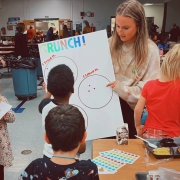
As a dietetic intern for Florida Impact, Kaley contributes to the Farm to Leon County Schools project — also referred to as “Farm to Fort” when working within the Fort Braden community — by leading nutrition education and engaging students through fun Taste Tests in which the students eat a new, locally grown produce each month.

Farm to Leon County Schools is an initiative that helps connect local farmers to the community in order to provide healthier and fresher options to children by combining nutrition and agricultural education in local schools.

Kaley has noticed that the children who participate in the Taste Tests get excited trying new foods as she encourages them to bring home what they learn and make new meals with the foods they try.

She is now working with the Florida Impact team to build a garden at Fort Braden with the goal to emphasize fresh healthy options that can be used in their everyday school lunches while involving the students in the growth process of certain foods.

Kaley is passionate about educating the public on nutrition and agricultural sustainability while working with her team to come up with new opportunities to get the community excited about consuming healthier food options.

In her free time, Kaley enjoys spending time outdoors, being with friends and family, cooking, reading, and traveling.

— Kaley

Hurricane Ian Recovery Resources

We created a list of information and referral for those hurt by Hurricane Ian below. If you have any additions, please send them to rafisusi@outlook.com. Thank you.

Statewide Information:

County-Specific Information:

Please scroll to the top of this page for more statewide resources.

Press Release: Florida Impact to End Hunger Receives Critical Investment from MAZON

FOR IMMEDIATE RELEASE:

August 16, 2022

MEDIA CONTACT:

Kim Johnson, 407-234-8042-kjohnson@flimpact.org

Florida Impact to End Hunger Receives Critical Investment from National Anti-Hunger Organization

A new wave of investment from MAZON: A Jewish Response to Hunger will seed and support grassroots anti-hunger infrastructure in Florida


Tallahassee, FL — Today, Florida Impact is pleased to announce a new partnership with MAZON: A Jewish Response to Hunger, a leading national anti-hunger organization, to further our efforts to curb hunger in our community. Florida Impact is one of 13 new partners in MAZON’s Emerging Advocacy Fund, a nationwide effort to support and expand grassroots anti-hunger work in the states most impacted by food insecurity. Over five years, the Emerging Advocacy Fund has invested in more than 50 other organizations in 19 states and Puerto Rico, and this latest allocation increases its total giving in the U.S. to more than $9.1 million. MAZON also invests in strategic partners in Israel and Indian Country.

“This grant from MAZON will allow us to have a seat at the table and continue the important work of our 42-year history of helping communities mobilize and maximize access to federal, state, and local food and nutrition programs with a focus on under resourced populations around our state,” said Kim Johnson, President/CEO of Florida Impact.

“With nearly four decades of experience fighting hunger in this country, we know that people in some states face greater barriers to food security, but no one deserves to be hungry — regardless of circumstance or zip code,” said Mia Hubbard, Vice President of Programs.

President of Programs at MAZON: A Jewish Response to Hunger. “We understand the value and vitality of building a strong, resilient anti-hunger advocacy infrastructure, and we are more committed than ever to listen to, learn from, and support communities facing high rates of food insecurity.”

In Florida, over 2 million people are experiencing hunger daily. That’s one out of nine people. Nationally, more than 10% of households — nearly 40 million people — struggle with food security, a rate that increases for families with children and in communities of color. MAZON’s new investments will build power among local advocates fighting for policy-based solutions designed to interrupt the vicious cycle of neglect and economic struggle, especially among our most vulnerable populations.

Other recipients of MAZON’s Emerging Advocacy Fund grants include:

● Alabama Arise (Montgomery, Ala.)

● Alabama Food Bank Association (Huntsville, Ala.)

● Alaska Federation of Natives (Anchorage, Alaska)

● Alaska Food Policy Council (Homer, Alaska)

● Alaska Native Tribal Health Consortium (Anchorage, Alaska)

● Arkansas Advocates for Children and Families (Little Rock, Ark.)

● Arkansas Hunger Relief Alliance (Little Rock, Ark.)

● Center for Rural Affairs (Lyons, Neb.)

● Centro para la Nueva Economía (San Juan, PR)

● Children’s Action Alliance (Phoenix, Ariz.)

● Espacios Abiertos (San Juan, PR)

● Feeding Indiana’s Hungry (Indianapolis, Ind.)

● Feeding Kentucky (Frankfort, Ky.)

● Feeding Louisiana (Baton Rouge, La.)

● Feeding Northeast Florida (Jacksonville, Fla.)

● Florida Policy Institute (Orlando, Fla.)

● Food Justice Lab/ West Virginia University Research Corp. (Morgantown, W.Va.)

● Good Shepherd Food Bank (Auburn, Maine)

● Hawai’i Appleseed (Honolulu, Hawai’i)

● Hawai’i Children’s Action Network (Honolulu, Hawai’i)

● Hawai’i Foodbank Collaborative (Honolulu, Hawai’i)

● Hawai’i Public Health Institute (Honolulu, Hawai’i)

● Hunger-Free Oklahoma (Tulsa, Okla.)

● Indy Hunger Network (Indianapolis, Ind.)

● Instituto del Desarollo de la Juventud (San Juan, PR)

● Kansas Action for Children (Topeka, Kan.)

● Kansas Appleseed Center for Law and Justice (Lawrence, Kan.)

● Kentucky Center for Economic Policy / Mountain Association for Community Economic Development (Berea, Ky.)

● Kentucky Equal Justice Center (Lexington, Ky.)

● Latino Community Fund of Georgia (Atlanta, Ga.)

● Legal Aid Society of Middle Tennessee and the Cumberlands (Nashville, Tenn.)

● Louisiana Budget Project (Baton Rouge, La.)

● Mississippi Center for Justice (Jackson, Miss.)

● Missouri Budget Project (St. Louis, Mo.)

● MomsRising (Raleigh, N.C.)

● Nebraska Appleseed Center for Law & Public Interest (Lincoln, Neb.)

● North Carolina Alliance for Health (Raleigh, N.C.)

● North Carolina Justice Center (Raleigh, N.C.)

● Oklahoma Policy Institute (Tulsa, Okla.)

● Open Sky Policy Institute (Lincoln, Neb.)

● Operation Food Search (St. Louis, Mo.)

● Preble Street (Portland, Maine)

● Partnership for a Healthy Mississippi (Flowood, Miss.)

● Poverty Solutions Group (Florida)

● Regional Food Bank of Oklahoma (Oklahoma City, Okla.)

● Tennessee Justice Center (Nashville, Tenn.)

● Voices for Georgia’s Children (Atlanta, Ga.)

● West Virginia Center on Budget and Policy (Charleston, W.Va.)

● West Virginia Healthy Kids and Families Coalition (Charleston, W.Va.)

● William E. Morris Institute for Justice (Phoenix, Ariz.)

About Florida Impact

Florida Impact is a statewide anti-hunger organization dedicated to helping communities mobilize and maximize access to federal, state, and local food and nutrition programs with a focus on under resourced populations. For more information please visit floridaimpact.org.

About MAZON: A Jewish Response to Hunger:

Inspired by Jewish values and ideals, MAZON is a national advocacy organization working to end hunger among people of all faiths and backgrounds in the United States and Israel. For more information on MAZON, please visit mazon.org.

A Healthier Holiday Menu

In the past couple years, the pandemic has made managing nutrition even more difficult because of limited resources and access to healthy food.

Around this time of year, families all over the country gather to celebrate the holidays. One major component of these celebrations is a large feast.

Florida Impact wishes to use our platform to not only make access to food easier for all people, but to also encourage people to eat healthier.

We found several traditional holiday dishes with healthy modifications to create this nutritious holiday menu:

2 Million Children at Risk as DeSantis is Poised to Pass Up $820 Million in Federal Food Assistance

Florida has not yet opted to participate in the Summer Pandemic Electronic Benefit Transfer program. Unless administration leadership  acts now, Florida is poised to leave $820 million in federal pandemic food assistance from Summer P-EBT for over 2 million hungry children on the table.

Summer P-EBT provides federal funding at no cost to states to deliver grocery benefits to children who missed out on free or reduced-price meals while their school or child care facilities were closed during the summer. Since summer feeding programs only reach 1 in 5 children who receive free or reduced-price meals at school, Summer P-EBT is a way to ensure that children in participating states do not go hungry while school is out.

Although schools have already started, it is not too late for Florida to elect to participate in Summer P-EBT, which can be provided retroactively. Many families carried much of the burden of meal costs for their children over the summer and are playing catch up from added food and other pandemic-related costs.

This $820 million in federal pandemic food assistance would come at no cost to states, has strong bipartisan support, and has already been implemented in most states, including Alabama, Arkansas, Louisiana, South Carolina, and Texas. Our Governor must step up for Florida’s children and act quickly to implement this critical nutrition program.

Here is what we’ve done so far, and what you can do to help…

Florida Impact to End Hunger—along with Florida Policy Institute, No Kid Hungry, Second Harvest Food Bank of Central Florida, and Feeding Tampa Bay—has created a press release and a sign-on letter urging Governor Ron DeSantis and the Florida Department of Children and Families to stand up for Floridians. We have until Friday, August 27th, 2021 to get as many organizations on this letter as we can. Please find more information about this effort and the sign-on form here ⮕ https://rebrand.ly/summerpebtadvocacy

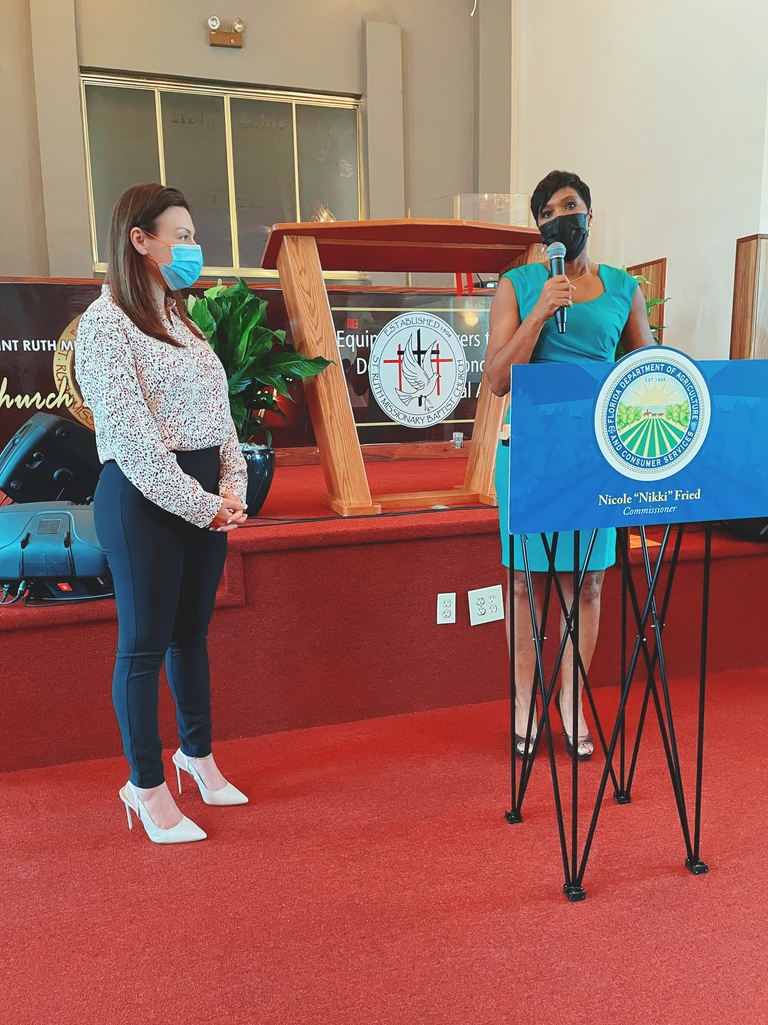
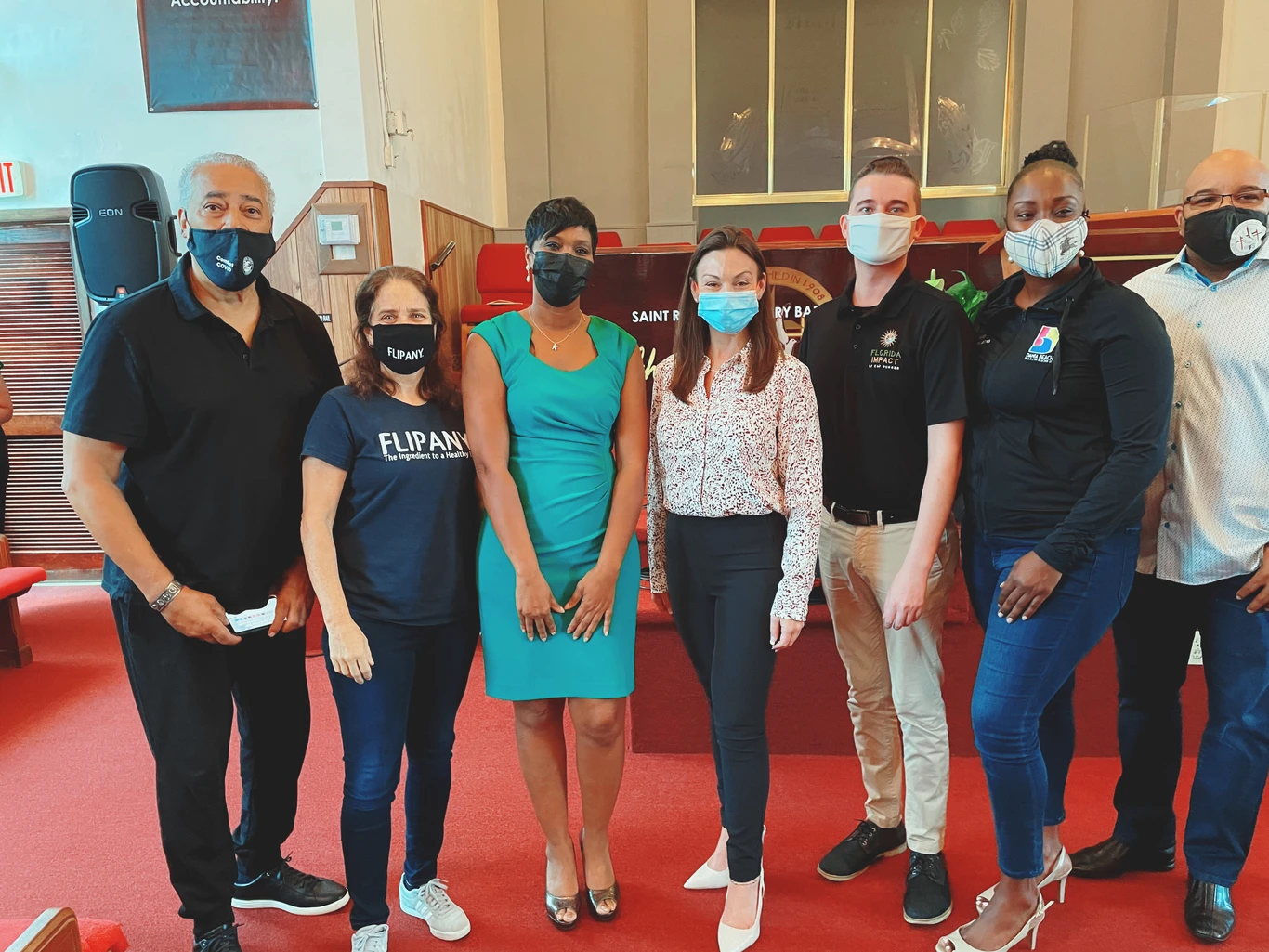
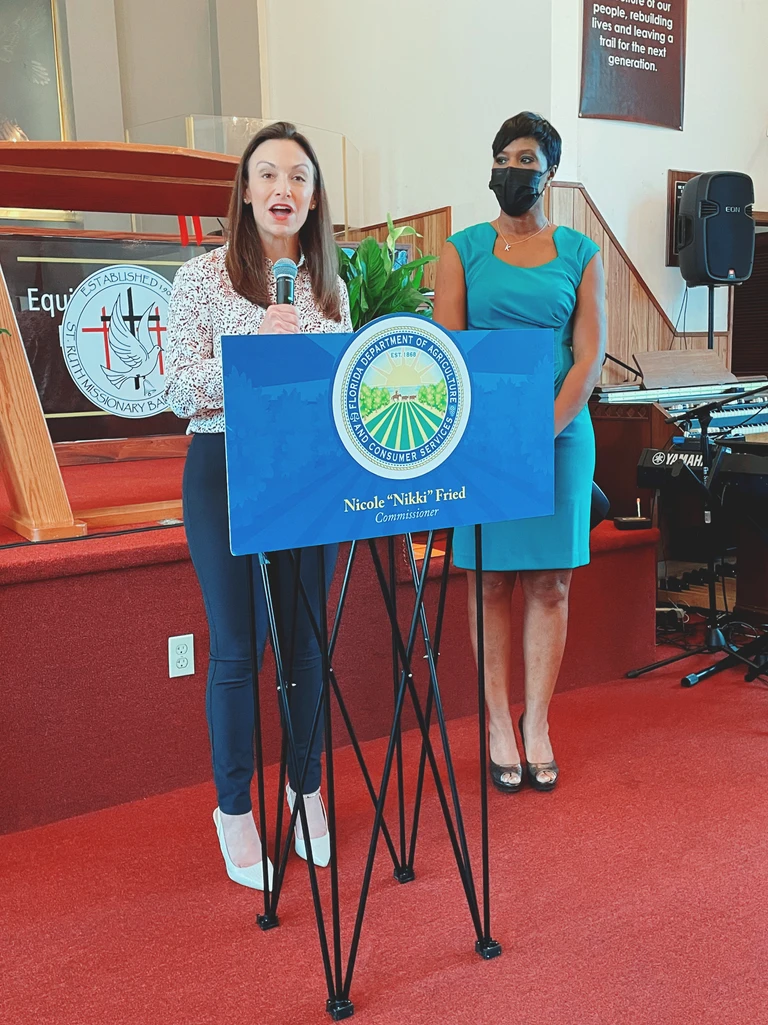
On Thursday, August 26th, Florida Impact and Florida Department of Agriculture & Consumer Services Commissioner Nikki Fried held a press conference calling on DeSantis to request the $820M in available federal food assistance for Florida children. You can find photos of the event below (click to enlarge) featuring our President/CEO Kim M. Johnson and Agriculture Commissioner Nikki Fried. You can watch the full press conference here.

Here is the media picking this up so far:

And here are additional letters to DeSantis:

Check back to this blog post for updates. Last updated: Thursday, April 26th — 4:45 PM.